CASE STUDY · JEWELRY
A restocking system for a three-brand jewelry group
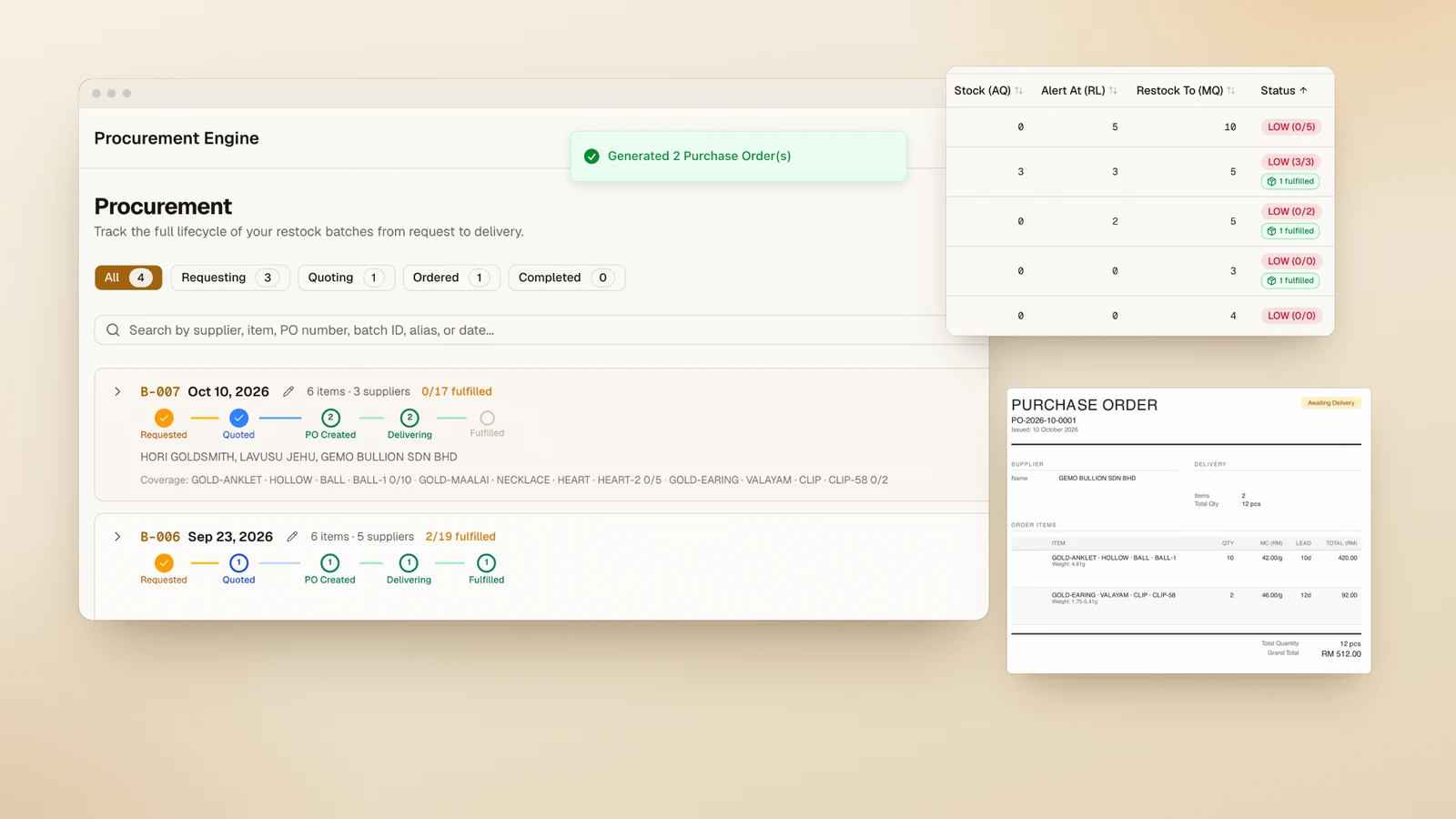
We built a restocking and supplier-quote system for a jewelry retail group in Malaysia: three sister businesses selling gold jewelry, with about 11,000 SKUs. It runs beside their ERP, and the group now runs it as its own system.
- CLIENT
- a jewelry retail group in Malaysia, three sister businesses
- SIZE
- about 11,000 SKUs
- BUILT
- restocking, supplier quotes and purchase orders, beside their existing ERP
- TODAY
- the group runs it as its own system
Before
Their ERP held the stock data, but restocking ran by hand:
- staff watched an inventory dashboard to spot low stock,
- supplier quotes came in as WhatsApp messages, with no standard format and no central record,
- purchase orders meant typing SKUs, weights and categories in again,
- and nobody had one view of supplier prices, lead times or past quotes.
The ERP wasn't flagging fast sellers early enough, so they kept missing the wave on hot pieces while slow stock sat.
What we did first
We started by shadowing the staff and mapping how a restock actually happens, step by step. Then we decided which steps to automate and which to leave manual on purpose. Negotiating with suppliers stayed with people: the team prefers to call or text suppliers for a better rate, and that needs a human touch.
What we built
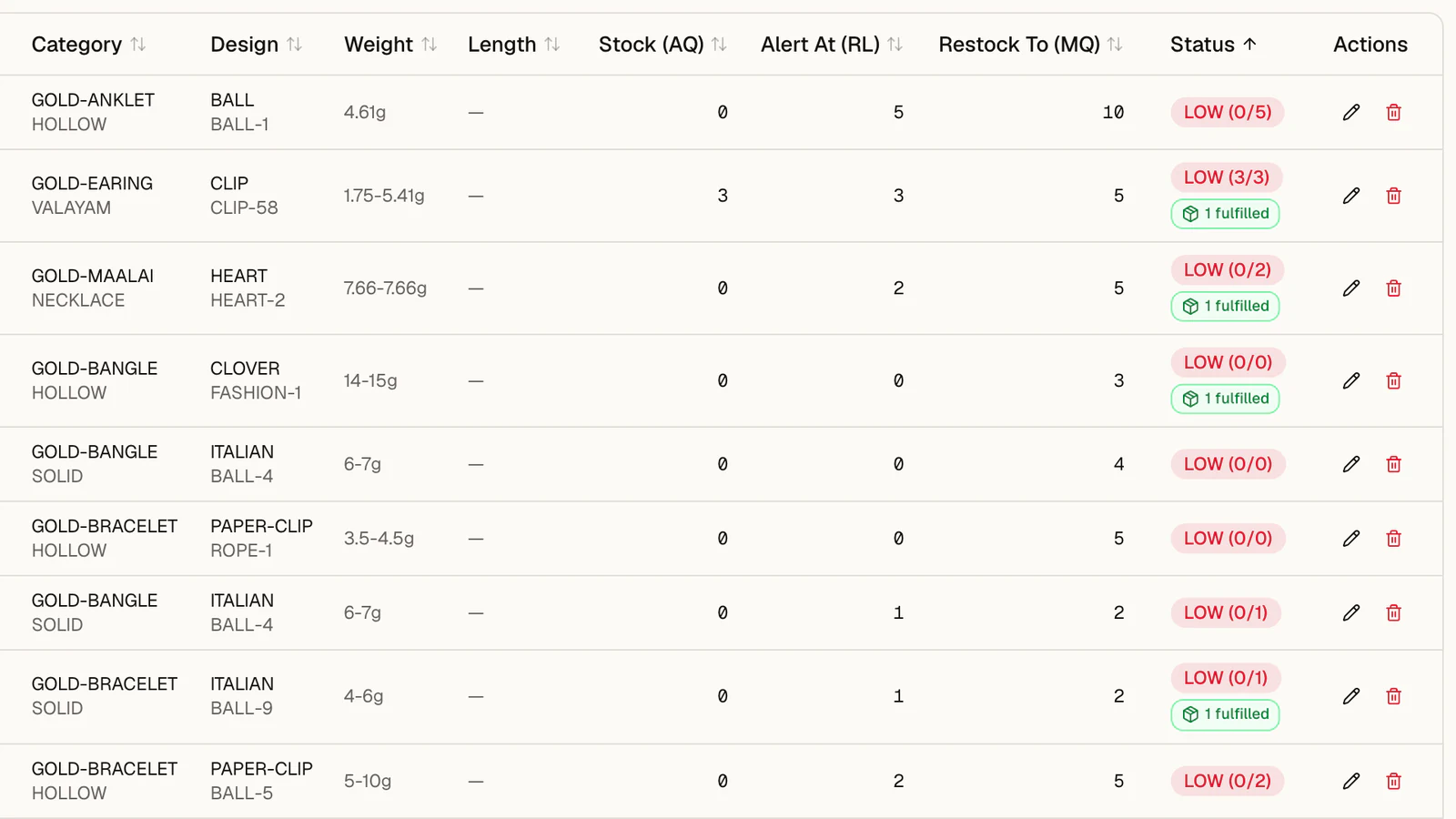
- Tracking rules by category or for a single piece: below a set level, restock up to a target.
- Fast sellers, so the team can see what's moving and start tracking it.
- Restock requests grouped by destination, with suppliers suggested from past purchases.
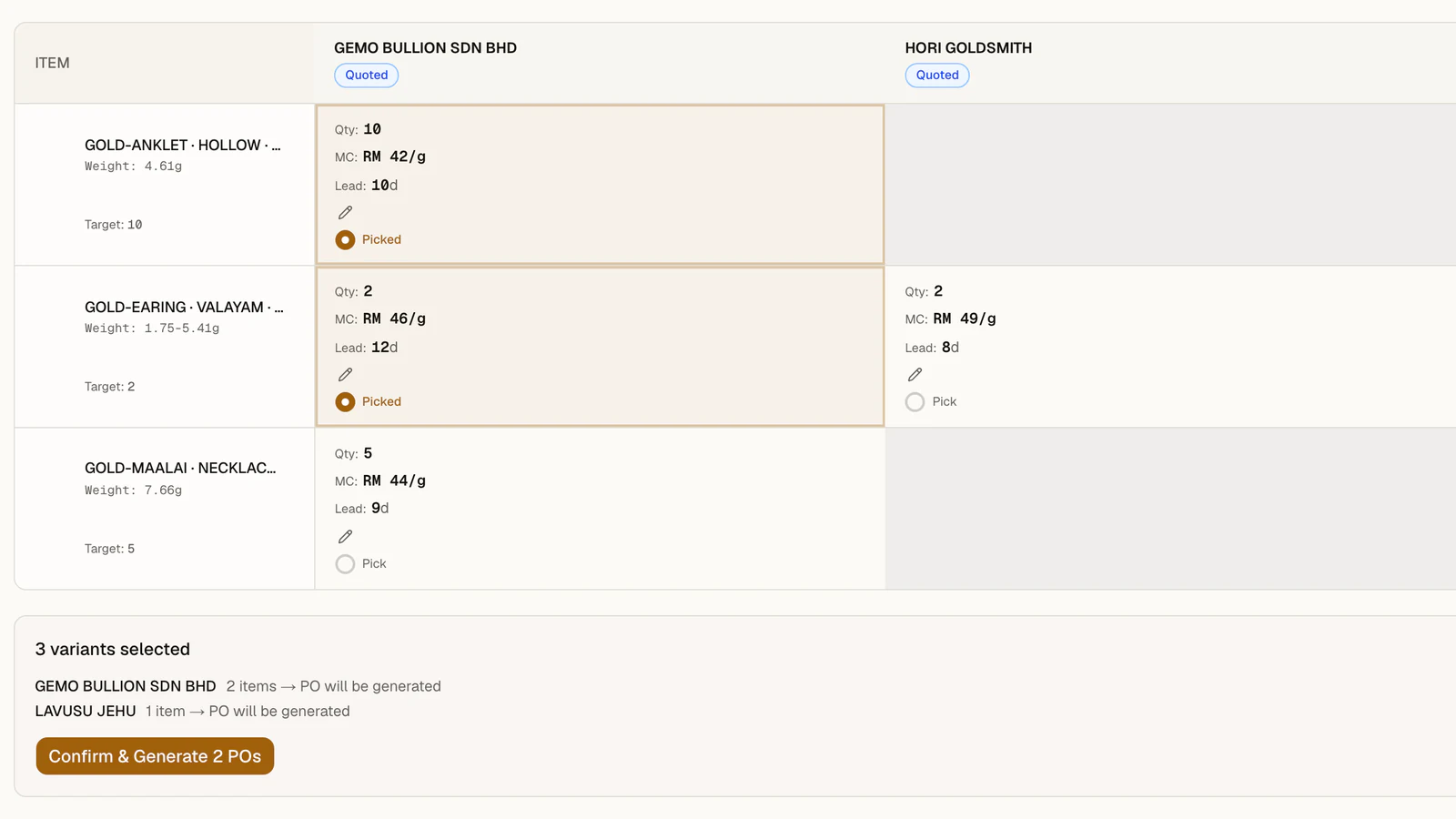
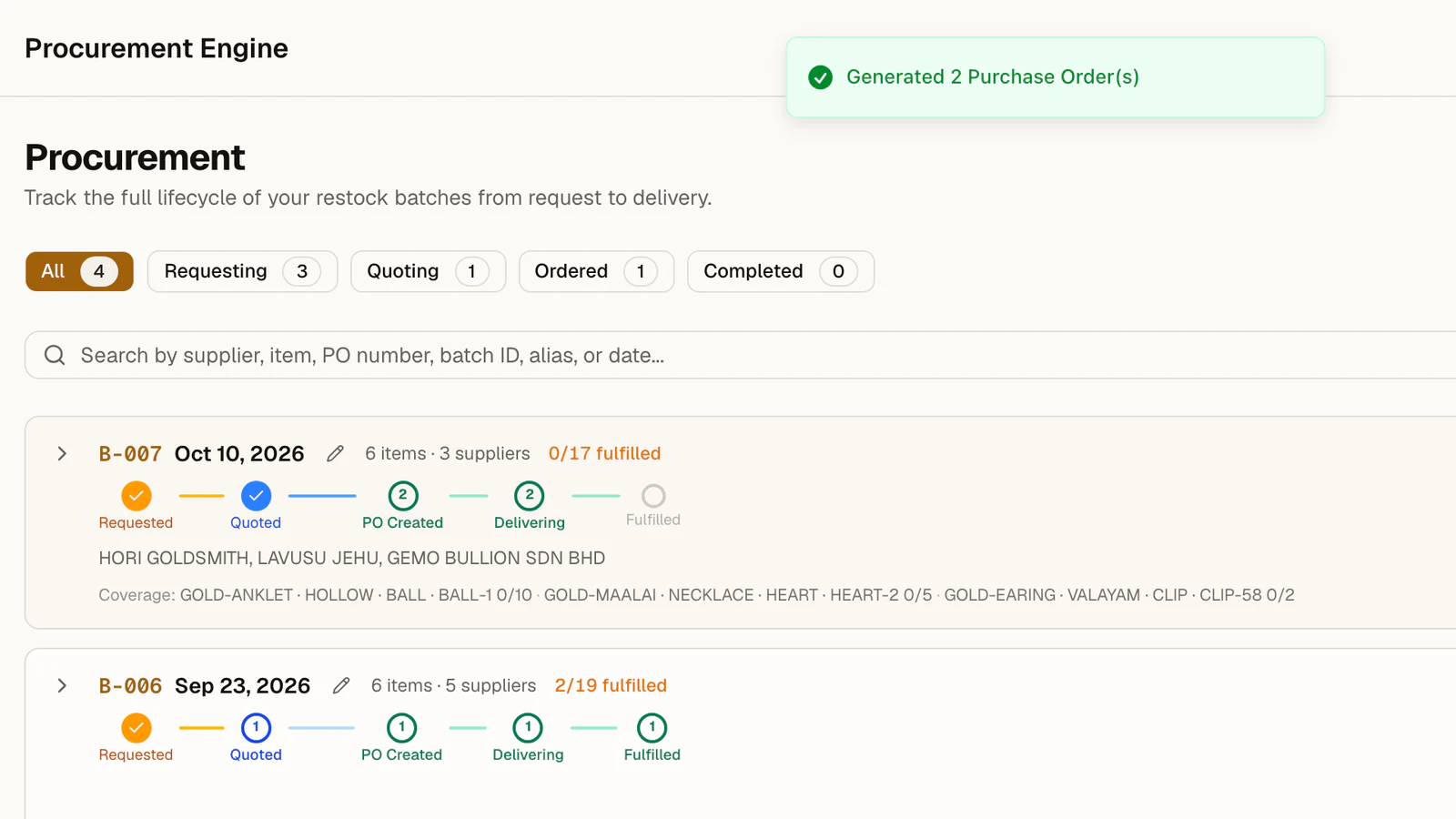
- A supplier portal behind password-protected links, where suppliers quote weight, making charge (the labor fee on top of the gold), lead time, notes and photos.
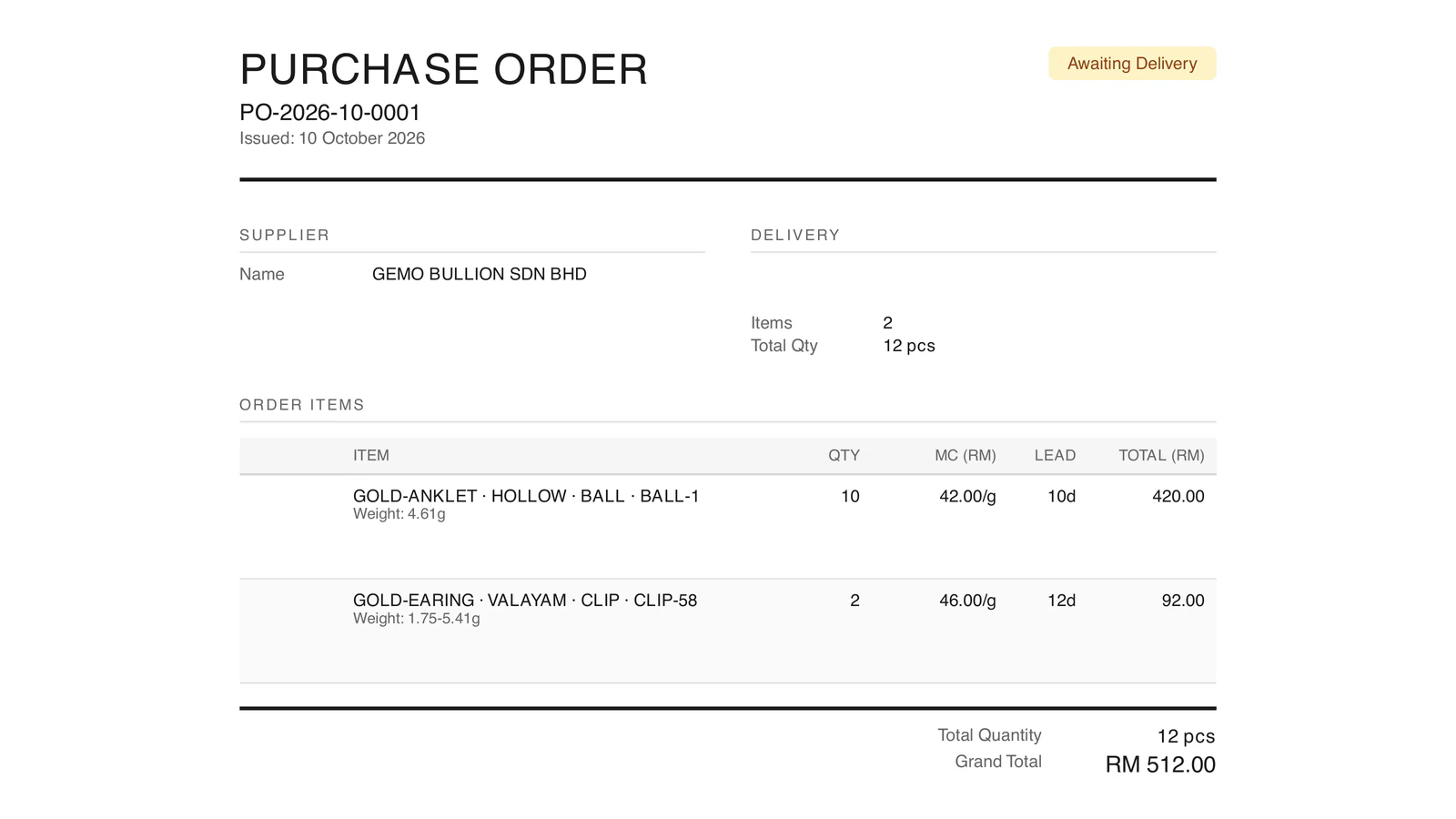
- Quote comparison side by side, then purchase orders as numbered PDFs with photos.
- Delivery checks, full or partial, marked by staff when goods arrive.
- One supplier list across all three businesses, with roles and an audit log of key actions.
Decisions worth copying
- 01
Read-only. The tool read a copy of the ERP's data every six hours and never wrote back.
- 02
Separate by business. Each business's data, rules and orders stay apart unless they're shared on purpose.
- 03
Manual where it matters. Negotiation and delivery checks stay with staff, so the team could get used to each change before the next.
What happened
In the managing director's words, it “took a lot of manual work off the team.” The group has since taken the system over and runs it as its own.
The restocking system demo film and five screens, from a demo copy with demo data.
Want this for your stores?Get your free Solution Map.
Get your free Solution Map